There are thoughtful people with real concerns about AI, and many of their questions deserve honest answers. But almost every criticism shares one blind spot: it never asks "compared to what?"
This site holds every major AI criticism against real data, real history, and real human outcomes. Not "is AI perfect?" but "compared to what we already have, is it better?" The data speaks for itself.
Throughout all of human history, technology and science are the only two things that have ever really solved real practical problems for humanity. Not ideologies, not prayers. When it comes to practical reality, it is only science and technology that have cured disease, saved us from famine, and brought light to where before, there was only darkness.
Skepticism toward new technology is healthy. But when that skepticism ignores the track record of every tool that came before, it stops being caution and starts being something else.
AI is the most important technological advancement in human history. The only tool we have ever built capable of fighting all of humanity's oldest enemies at the same time.
In 1961, President Kennedy called on humanity to unite against the common enemies of man. A year later, he committed the whole world to going to the Moon, not because it was easy, but because it was hard. The space race didn't start a war. It prevented one. Two superpowers chose to compete in the healthiest way possible: by reaching for the stars, for the betterment of all mankind.
The AI race can be the same thing. A healthy competition between nations, between China and the U.S. and Europe, that lifts everyone. But only if we choose to race, not retreat.
A struggle against the common enemies of man: tyranny, poverty, disease, and war itself.
Inaugural Address, January 20, 1961
We choose to go to the Moon in this decade and do the other things, not because they are easy, but because they are hard.
Rice University, September 12, 1962
Kennedy didn't wait until space travel was safe, cheap, or fully understood. He committed the world to it because the cost of not going was greater than the cost of going. AI is the same bet, at a civilizational scale. That starts with facts, not fiction. Reason and logic, not fears and emotions. Data, not misconceptions.
Kennedy named four enemies. For the first time in history, humanity has a technology that can fight all four simultaneously, and win.
Open-source AI translates dissident voices instantly, breaks censorship with decentralized networks, and makes authoritarian information control exponentially harder. AI gives individuals the analytical power that used to belong only to states.
AI-driven financial inclusion brings banking to 1.4 billion unbanked adults. Precision agriculture feeds more people with less land. AI-powered education reaches students with zero teachers available. Economic modeling suggests AI could add $15.7 trillion to global GDP by 2030.
AI cut drug discovery timelines from 12 years to under 4. DeepMind's AlphaFold compressed 10,000 researcher-years into months. AI diagnostics detect cancers earlier than human radiologists. The mRNA vaccines that ended the pandemic were designed with AI-assisted protein modeling.
AI-powered early warning systems predict conflicts before they escalate. Satellite imagery AI detects troop movements and humanitarian crises in real time. AI translation and diplomacy tools reduce the miscommunication that starts wars. Precision targeting, when used, reduces civilian casualties versus unguided alternatives.
Slowing down AI means accepting more time with tyranny, poverty, disease, and war. That's the trade-off worth examining honestly.
AI is not without risks, and this site doesn't pretend otherwise. But every risk deserves the same question:
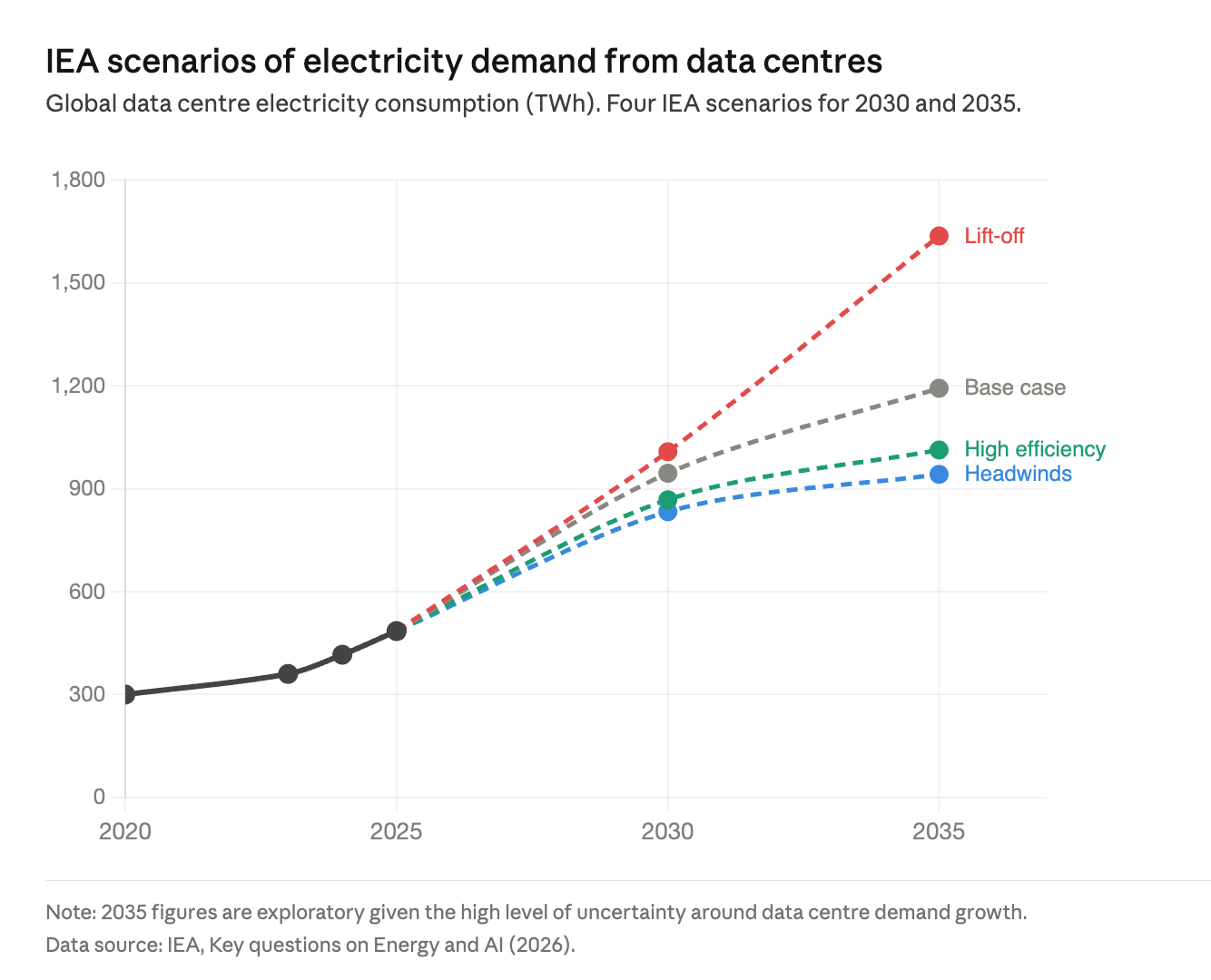
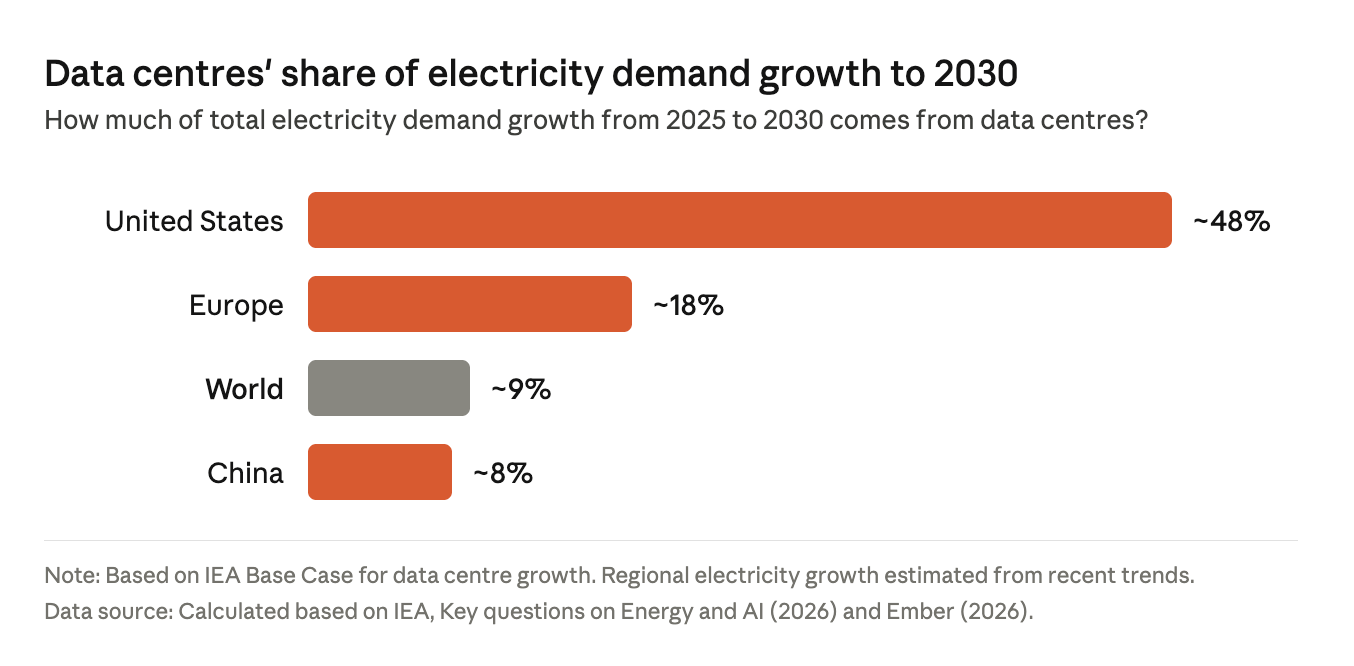
"AI uses too much energy." Sure. But so does everything else, and most of those things don't accelerate solutions to climate change, disease, or poverty.
Global AI training + inference vs. industries we don't question
Liters of water per unit of output
Energy cost vs. human researcher-hours equivalent
We've made this mistake before. In the 1970s and 80s, fear, not facts, froze nuclear energy at its most immature stage. We're still paying for it in lives and emissions.
No direct deaths. Zero radiation casualties confirmed. Media coverage: apocalyptic. Public response: nuclear is finished.
Dozens of planned nuclear plants cancelled. Gap filled by coal and natural gas. Emissions rise. Nobody notices the counterfactual.
Direct radiation deaths: 1. Evacuation-related deaths from panic: 2,202. Germany announces nuclear exit. Goes back to coal.
Last reactors closed. Germany's per-capita emissions: 2x France (nuclear-powered). The "green" decision increased carbon output measurably.
Including accidents, air pollution, and supply chain fatalities
Researchers at UC Berkeley estimated that if the US hadn't slowed nuclear expansion after 1970, the country would have avoided 1.8 million premature deaths from air pollution and prevented the emission of 64 gigatons of CO2.
The anti-nuclear movement didn't save lives. It cost them. Measurably. In millions.
Lifecycle emissions including construction and fuel
Critics fixate on AI failures. They never show you the denominator: the baseline failure rate of the human systems AI is replacing. When you add the denominator, the math changes completely.
Autonomous vehicles vs. human drivers (US data)
Error rates across specialties where AI has been deployed
Documented discrimination rates in recruitment studies
People evaluate technology at its present state, not its trajectory.
When nuclear was young, critics judged it by its 1970s limitations, not by where passive safety, SMRs, and thorium would take it. When AI is young, critics judge it by its 2024 limitations, not by what fully mature AI will look like.
Half-measures with exponential technologies produce the worst possible outcome: too much investment to abandon, too little to reach maturity. Stuck in the expensive, inefficient early phase indefinitely. All the costs. None of the benefits.
This is the current risk with AI regulation: enough restriction to slow progress, not enough to stop it, guaranteeing maximum cost for minimum benefit.
Sixteen of the most common AI criticisms. Each one answered the same way: with data, context, and the question nobody asks.
Yes, AI will eliminate most jobs. This is not a maybe. This is not a drill. 30-70% of jobs across the Western world and Asia will be displaced by 2035, and 70%+ by 2040. But compared to what? Compared to the last 10,000 years of work-obsession that we mistake for human nature? For over 95% of human history, our ancestors worked 15-20 hours a week. The Hadza spend less than two hours a day obtaining food. The !Kung Dobe Bushmen work roughly 15 hours a week. The rest was art, storytelling, music, social bonding, exploration. The 9-to-5 grind is not who we are. It is a 10,000-year aberration born from agriculture, industrialized by factories, and sanctified by what Max Weber called the Protestant work ethic. We are not losing our identity. We are getting it back.
The expert consensus. 2,778 AI researchers were surveyed about the probability of AI causing human extinction. The people who understand AI best gave a clear answer.
The media narrative focuses on political deepfakes. The data tells a very different story about what deepfakes actually are, and how misinformation worked long before AI.
Breakdown of detected deepfake content by category (Sensity AI, 2024)
The surveillance infrastructure that already existed long before AI. The uncomfortable truth: you were already being tracked at scale.
AI hardware waste is real. But singling out AI while ignoring vastly larger waste streams is not a serious environmental position.
AI e-waste in context of global waste streams
Every new creative medium in history was accused of not being "real art." The pattern is remarkably consistent across centuries.
Stanford research shows academic dishonesty rates were virtually identical before and after ChatGPT. The tool changed; the behavior didn't.
Wealth inequality is a real crisis. But blaming AI for it requires ignoring $50 trillion of evidence pointing elsewhere.
AI bias is real and documented. But it replaced a system where bias was invisible, untestable, and deniable.
AI hallucination dropped from 40% to under 2% in two years. Meanwhile, human professionals have error rates that nobody talks about.
AI hallucination rate in context of established human error rates
Every cognitive tool in history triggered the same fear: this will make us dependent and destroy our skills. Every time, humans developed higher-order skills instead.
The alternative to AI mental health support isn't perfect human therapy. For 137 million Americans, the alternative is no help at all.
Every transformative media technology faced identical copyright challenges. Every one was resolved with new frameworks that balanced creator rights with progress.
The weapons systems AI would replace. Current military operations already produce devastating civilian casualties with minimal accountability.
AI data centers use water for cooling, and that's a legitimate concern worth tracking. But the numbers tell an interesting story when you put them next to the things we already accept without question.
Northern Virginia's "Data Center Alley" hosts roughly 70% of the world's internet traffic. Local electricity prices have risen as demand outpaces grid capacity. This is a real infrastructure challenge, and it deserves an honest look at the full picture.
Critics describe data centers as they were five years ago. The industry is engineering its way to zero-water, nuclear-powered, heat-recycling facilities, and even moving to space.
142+ activist groups across 24 US states opposing data center construction
How modern data centers are eliminating water dependency
Over 10 GW of nuclear capacity has been signed specifically for data centers. The same technology the anti-nuclear movement tried to kill is now being revived to power AI, producing zero-carbon electricity 24/7.
What if data centers didn't need land, water, or terrestrial energy at all? Multiple companies and space agencies are making orbital computing a reality.
Lumen Orbit puts the first NVIDIA H100 GPU in space. Achieves successful computation in zero gravity. $1.1 billion valuation.
Starcloud trains the first large language model entirely in orbit, proving AI workloads are viable in space.
FCC application for an orbital data center constellation of one million satellites. The scale of ambition signals this is not a side project.
European Space Agency's EUR 300M program: 13 blocks at 10 MW each by 2036. Government-backed orbital computing infrastructure.
Space eliminates the core objections to data center expansion
The strongest objection to everything above isn't about any single data point. It's structural: the costs of AI are immediate and measurable, while the benefits are projected and uncertain. This deserves an honest answer.
Energy bills arrive today. Job losses happen now. Water usage is measured in real time. But the promised breakthroughs in medicine, climate, and scientific discovery? Those are forecasts. And forecasts can be wrong.
If you're the one paying the front-loaded cost — a displaced worker, a community with rising electricity rates — "wait for the benefits" is cold comfort.
Every transformative technology followed this exact curve. Electricity was expensive and dangerous for decades before it was cheap and universal. Vaccines were costly and distrusted before they eradicated smallpox. The internet was a military research expense for 30 years before it generated $15 trillion in annual economic value.
The difference with AI: the lag between cost and benefit is compressing. AlphaFold solved a 50-year protein structure problem in months, not decades. AI-designed drugs are already in clinical trials. The benefits aren't all future tense.
The question isn't whether to bear transition costs — every generation did. The question is whether the transition is moving in the right direction. Solar energy was more expensive than coal for 40 years. The people who invested anyway weren't naive. They were reading the curve correctly. The same curve applies here.
Kennedy identified the common enemies of man: tyranny, poverty, disease, and war. For sixty-five years, we fought them with the tools we had. Now, for the first time, we have something that can fight all four at once.
A struggle against the common enemies of man: tyranny, poverty, disease, and war itself.
Every criticism of AI in this document was answered the same way: with data, context, and one question nobody asks.
Not compared to a perfect system. Not compared to an imagined future where we don't need this technology. Compared to what we actually have: human systems that misdiagnose, discriminate, pollute, and fail, every single day, at scale.
The data isn't always favorable to AI. Some criticisms hold up, and this site says so when they do. But the weight of evidence points in one direction: slowing down this technology has a cost, measured in problems that remain unsolved and lives that remain unchanged.